Friday, 7 September 2018

Growth of Quality Management System in Healthcare Industry


Government mandates for healthcare providers to report quality & improve the performance of care provided, increase in the volume of unstructured data in the healthcare industry, and need to curtail healthcare costs & medical errors are the major factors driving the growth of the market. However, data security concerns and the high cost of quality reporting are expected to restrain the growth of this market to a certain extent.

"The global Healthcare Quality Management Market is projected to reach USD 3.31 Billion by 2022 from USD 1.51 Billion in 2016, at a CAGR of 14.2%"

The global market is segmented on the basis of type, delivery mode, application, end user, and region.


This report also provides market information on major regional segments, namely, North America, Europe, Asia-Pacific, Latin America, and the Middle East & Africa.
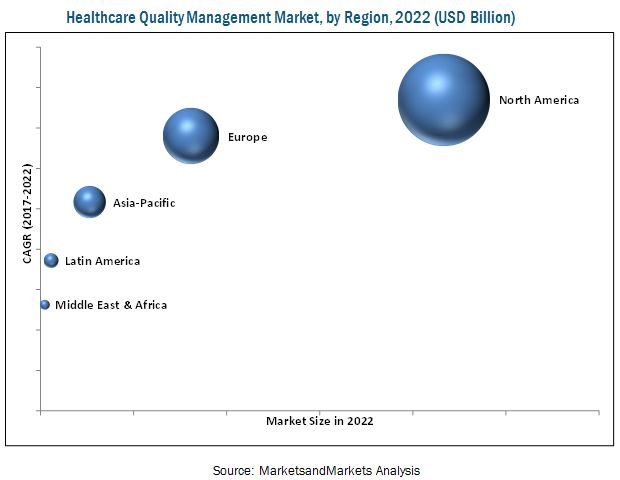


On the basis of type, the market is segmented into business intelligence & analytics solutions, physician quality reporting solutions, clinical risk management solutions, and provider performance improvement solutions. In 2016, the business intelligence & analytics solutions dominated the market. The large share of this segment can primarily be attributed to the need of healthcare providers to reduce the soaring operating costs, rising demand for quality healthcare, government measures to promote value-based care, and the increasing number of claims denied from insurers.

Based on delivery mode, the web-& cloud-based solutions dominated the market. The large share of this segment is mainly attributed to the flexibility of working from remote areas, affordability, and automated updating features of web-& cloud-based solutions.

By application, the market is classified into data management and risk management. The data management segment is expected to register the highest CAGR during the forecast period. The large share of this segment is attributed to the increasing volume of disparate data and the requirement of quality-based reports by regulatory bodies.

The major end users of healthcare quality management market are hospitals, ambulatory care centers, payers, and ACOs. The hospitals segment accounted for the largest share of the global market in 2016. Growing HCIT adoption, increasing focus on patient safety, significant growth in healthcare spending, rising medical error rates, increasing healthcare costs, and government mandates to follow quality measures are the major factors supporting the adoption of healthcare quality management solutions in hospitals.


Thursday, 6 September 2018

Significant Growth Opportunities of Professional Dental Care Market

Factors such as growing number of small/ private dental clinics, rising incidences of dental caries, increasing disposable incomes in emerging countries, growing awareness about dental hygiene, and economic gains for dental practitioners are the major factors driving the growth of the global market. However, increasing number of large/group dental practices and reluctance to adopt dental dispensing practices by dental practitioners are expected to restrain the growth of this market to certain extent.

"Global professional dental care market is estimated to grow at a CAGR of 4.5% from 2016 to 2021 to reach USD 961.0 Million by 2021"


On the basis of product type, the market is segmented into toothpastes, toothbrushes, mouthwashes/rinses, denture products, dental accessories/ancillaries, and other professional dental care products. The toothpastes segment accounted for the largest share of the global professional dental care market in 2015 owing to its wide utilization by the end-users. The toothbrushes market is expected to register highest growth during the forecast period of 2016-2021. 

The technological advancement in the electric toothbrushes in recent years is expected to drive the growth of this segment in coming years. The dental accessories/ancillaries market is further segmented into cosmetic whitening products, breath fresheners, dental floss, and dental water jet. Owing to the increased demand for the daily teeth whitening products, the cosmetic whitening products accounted for the largest share of the dental accessories/ancillaries market.

Download FREE Brochure @ https://www.marketsandmarkets.com/pdfdownload.asp?id=210346692

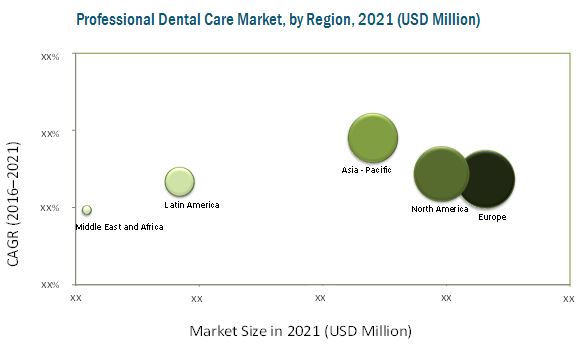
Geographically, the global professional dental care market is segmented into North America, Europe, Asia-Pacific, and the Rest of the World. In 2015, Europe commanded a major share of the market. However, Asia-Pacific is expected to witness the highest growth rate during the forecast period. Growth in the Asia-Pacific market can be attributed to rising geriatric population, increasing awareness about dental health, and medical tourism will drive the growth of this market in the APAC.

Some of the prominent players in the professional dental care market include Colgate-Palmolive Company (U.S.), The Procter & Gamble Company (U.S.), Unilever plc (U.K.), Johnson & Johnson (U.S.), Young Innovation, Inc. (U.S.), Ultradent Products, Inc. (U.S.), GC Corporation (Japan), GlaxoSmithKline plc (U.K.), Dr. Fresh, LLC (U.S.), 3M Company (U.S.), Koninklijke Philips N.V. (Netherlands), and Sunstar (Japan).


Technological Advancements Towards the Development of Rapid Antimicrobial susceptibility testing (AST) Methods

Factors such as increasing prevalence of infectious diseases across the globe, emergence of antimicrobial resistance caused due to drug overuse, increasing initiatives by government organizations towards improving the detection and control antimicrobial resistant species, and improving growth opportunities in emerging markets are boosting the demand for antimicrobial susceptibility testing products.


"The global antimicrobial susceptibility testing market is expected to reach USD 3.47 Billion by 2022 from USD 2.71 Billion in 2017, at a CAGR of 5.1%."


Antimicrobial susceptibility testing (AST) market by product, method, type, application, end user, and region.


By method, the market is segmented into disk diffusion, dilution, ETEST, automated susceptibility testing, and genotypic methods. Growth in this segment can largely be attributed to its low cost and the flexible nature of these methods.

By product, the global market is segmented into automated laboratory instruments, manual antimicrobial susceptibility testing products, culture and growth media, and consumables. The manual susceptibility testing products segment is expected to command the largest share of the global AST market in 2017. This is attributed to factors such as the rising prevalence of infectious diseases leading to an increased demand for susceptibility testing products and benefits such as low cost and the ease of use of these products.


By application, the global market is segmented into clinical diagnostics, drug discovery and development, epidemiology, and other applications. The other applications segment includes veterinary diagnostics, bioterrorism surveillance, and environmental monitoring. The clinical diagnostics segment accounted for the largest share in 2017. A number of factors such as the increasing prevalence of infectious diseases, the rising burden of antimicrobial resistance, and growing awareness about the use of antimicrobial susceptibility testing methods for diagnostic applications are responsible for the large market share of this application segment
.
On the basis of end users, the global AST market is segmented into diagnostic laboratories and hospitals; pharmaceutical and biotechnology companies; contract research organizations; and research and academic institutes. The hospitals and diagnostic laboratories segment is estimated to command the largest share of the antimicrobial susceptibility testing market in 2017. Some of the factors driving the growth of this segment are the increasing prevalence of infectious diseases, increasing healthcare expenditure, and the increasing number of initiatives towards better antibiotic use.


Wednesday, 5 September 2018

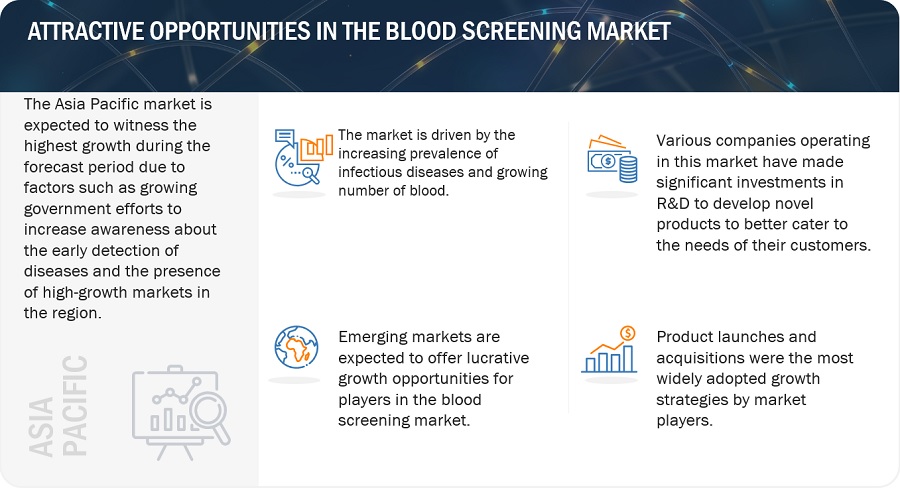
Blood Screening Market to Showcase Lucrative Growth Opportunities in the Forecast Period 2021

The global blood screening market is expected to reach USD 2.80 Billion by 2021 from USD 1.76 Billion in 2016, at a CAGR of 9.7%.

The global market is broadly classified into technology, product & service, end user, and region.
On the basis of technology, the market is segmented into NAT, ELISA, rapid tests, western blot assays, and NGS. The NAT segment is further subsegmented into transcription-mediated amplification (TMA) and real-time PCR. The ELISA segment is further classified based on various platforms and generations.
On the basis of platform, the ELISA market is segmented into chemiluminescence immunoassay (CLIA), fluorescence immunoassays (FIA), and colorimetric immunoassay (CI). On the basis of generation, the ELISA market is segmented into first generation ELISA, second generation ELISA, third generation ELISA, and fourth & above generation ELISA.
On the basis of product and service, the blood screening market is segmented into reagents & kits, instruments, and software & services. The reagents & kits segment is further subsegmented into NAT reagents and kits, ELISA reagents and kits, and other reagents and kits. On the basis of purchase mode, the instruments market is segmented into rental purchase and outright purchase.


Based on end user, the blood screening market is segmented into blood banks and hospitals.
Based on region, the market is segmented into North America, Europe, Asia, and RoW.
The major players in the blood screening market are Grifols (Spain), Bio-Rad Laboratories, Inc. (U.S.), Roche Diagnostics (Switzerland), bioMérieux (France), Abbott Laboratories (U.S.), Siemens Healthineers (Germany), Thermo Fisher Scientific, Inc. (U.S.), Beckman Coulter, Inc. (U.S.), Ortho Clinical Diagnostics, Inc. (U.S.), and Becton, Dickinson and Company (U.S).

Rising Prevalence of Heart Valve Disease is One of the Major Factors Driving the Growth of the Prosthetic Heart Valves Market


The global prosthetic heart valves market covers the artificial heart valves which are implanted in the hearts of patients suffering from heart valve disease (HVD). 

"This market is expected to reach USD 8.86 billion by 2022 from USD 4.84 billion in 2017, at a CAGR of 12.9% during the forecast period."

Globally, the prosthetic heart valves market is witnessing growth due to factors such as rising geriatric population and the subsequent growth in the prevalence of heart valve disease (HVD), regulatory approvals for new and advanced prosthetic heart valves, increasing government funding for heart valve research, rising awareness about HVD, and favorable reimbursement scenario for prosthetic heart valves. 


On the other hand, the high cost of transcatheter aortic valve replacement (TAVR) procedures and the availability of alternative methods for treating HVD are expected to restrain market growth to a certain extent.

Based on the type of valves, the prosthetic heart valves market is segmented into transcatheter heart valves, tissue heart valves, and mechanical heart valves. The transcatheter heart valves segment is expected to continue to dominate the global prosthetic heart valves market in 2022. The large share of this segment can be attributed to the rising prevalence of aortic stenosis, increasing pool of patients owing to approvals for extended valve indications, and technological advancements.

In the report, the global prosthetic heart valves market has been analyzed with respect to four major geographies—North America, Europe, Asia-Pacific, and the Rest of the World (RoW). North America is expected to command the largest share of 55.20% of the global prosthetic heart valves market in 2017 and is projected to register the highest CAGR of 16.1% from 2017 to 2022. Factors such as the rapid growth in the aging population and prevalence of valvular heart diseases, favorable reimbursement scenario, and rising product approvals for heart valves are supporting the growth of the North American prosthetic heart valves market.

Given the immense opportunities in developing transcatheter heart valves, market leaders and emerging players are increasing their focus in this market segment in order to increase their revenues.


Monday, 3 September 2018

Emergence of New Superdisintegrants for the Pharmaceutical Industry


The overall growth of the superdisintegrants market is driven mainly by the increasing adoption of orally disintegrating tablets (ODT), growing generics market, and the emergence of new superdisintegrants for the pharmaceutical industry. The shifting focus of pharmaceutical manufacturing to emerging markets and the growth of the overall pharmaceutical sector in these markets present significant opportunities for the superdisintegrants market growth. However, safety and quality concerns are expected to challenge the market growth to a certain extent during the forecast period.


In this report, the market is segmented by type, formulation, therapeutic area, and region. 


By type, the global superdisintegrants market is segmented into natural superdisintegrants, synthetic superdisintegrants, and other superdisintegrants. Synthetic superdisintegrants accounted for the largest share of the superdisintegrants market in 2017. The large share of this segment is attributed to the increasing number of companies manufacturing synthetic superdisintegrants due to their widespread usage in various pharmaceutical formulations.


By formulation, the superdisintegrants market is segmented into tablets and capsules. The tablets segment accounted for the larger share of the superdisintegrants market in 2017. The large share of this segment can be attributed to the widespread use of ODTs and fast-disintegrating tablets (FDTs) among healthcare providers and patients, resulting in the large-scale manufacture of these products by pharmaceutical manufacturers. The high demand for such ODTs and FDTs can be attributed to their advantages such as increasing drug bioavailability, better pregastric absorption, ease of swallowing in patients with dysphagia, ease of administration, and improved shelf life.

Based on therapeutic area, the superdisintegrants market is segmented into gastrointestinal diseases, neurological diseases, oncology, infectious diseases, cardiovascular disease, hematological diseases, and inflammatory diseases. Neurological diseases accounted for the largest share of the superdisintegrants market in 2017. This segment is also expected to witness the highest growth during the forecast period. The large share of the neurological diseases segment is attributed to the extensive usage of superdisintegrants in the formulation of ODTs for antidepressants, antipsychotics, antimigraine, and sedatives used in the treatment of neurological conditions.

The superdisintegrants market in the APAC region is expected to register the highest CAGR during the forecast period. Several factors, such as the region’s growing scientific base and capabilities, growth in the Asian pharmaceutical markets and pharmaceutical manufacturing capabilities, and the large patient pool are contributing to the growth of the superdisintegrants market in the region. The region is witnessing an increasing number of investments by major market players to leverage the high-growth opportunities provided by emerging markets such as China and India.


Rising Internet Connectivity and Smart Device Adoption Demanding Healthcare Chatbots Market


The growth of the healthcare chatbots management market can be attributed to rising Internet connectivity and adoption of smart devices, and the need for virtual assistance.  


Various prominent players are focusing on adopting inorganic growth strategies such as agreements and partnerships to ensure sustainability and growth in this highly competitive market. This helps companies operating in the market enhance their product portfolio, expand their customer base, and cater to the unmet demands of their customers.


 Some of the recent developments in this regard are listed below:  

·    In June 2018, Bupa, an insurance provider, entered into a partnership with Babylon to provide artificial intelligence-powered health services to all its corporate business clients. End-users can access around-the-clock health advice through Bupa in the UK.

·   In May 2018, Your. MD entered into a partnership with BMJ Best Practice. According to the partnership, the medical data used by Your.MD’s AI algorithms will be validated by BMJ best practices to provide data accuracy to users.


 In May 2018, Sensely entered into a partnership with NAS to deploy Sensely's virtual health assistant technology to the NAS member ecosystem as a means of boosting engagement and providing a more efficient communication channel.


Based on component, the market is segmented into software and services. The services segment is expected to grow at a higher CAGR during the forecast period as compared to the software segment, due to the recurring need for services such as software upgrades and maintenance.

Based on deployment model, the healthcare chatbots market is segmented into on-premise model and cloud-based model. In 2018, the cloud-based model segment is projected to grow at a higher growth rate during the forecast period as compared to the cloud-based model segment. Cloud-based healthcare chatbot solutions are sold on the basis of subscription, ranging from one month to multiple years, and these solutions do not require significant setup charges. Moreover, the maintenance and support service charges are included in the subscription fees, which make these solutions more affordable for customers. These factors are driving the cloud-based model segment.


Based on application, the healthcare chatbots market is segmented into symptom checking & medication assistance and appointment scheduling & medical guidance. In 2018, the appointment scheduling & medical guidance segment is expected to grow at a higher CAGR during the forecast period as compared to the symptom checking & medication assistance segment, mainly due to the growing usage of healthcare chatbots by hospitals and clinics.

By region, the healthcare chatbots market into North America, Europe, Asia, and the Rest of the World (RoW), the healthcare chatbots market in North America is expected to grow at the highest CAGR during the forecast period. Factors such as the growing number of therapy chatbots, increasing adoption of smart devices, rise in venture capital investments to develop advanced chatbots, availability of technologically advanced chatbot solutions, presence of a well-developed healthcare IT infrastructure, and presence of several key market players are driving the growth of the healthcare chatbots market in North America.  


Patient Portal Market Size, Market Growth Projection to 2023

The growth of the overall patient portals market can be contributed to the federal mandates like meaning use, growing patient centric appro...